Finance
Reads the numbers, and refuses to be your adviser.
It walks through the problem instead of handing over the result, turns a chapter into questions you can test yourself with, and says when it is unsure rather than filling the gap with something that reads well.
A chapter, a script, a photo of the whiteboard.
Not “explain photosynthesis” but the step where it stopped making sense.
Flashcards flip in the conversation, questions carry the explanation with the answer.
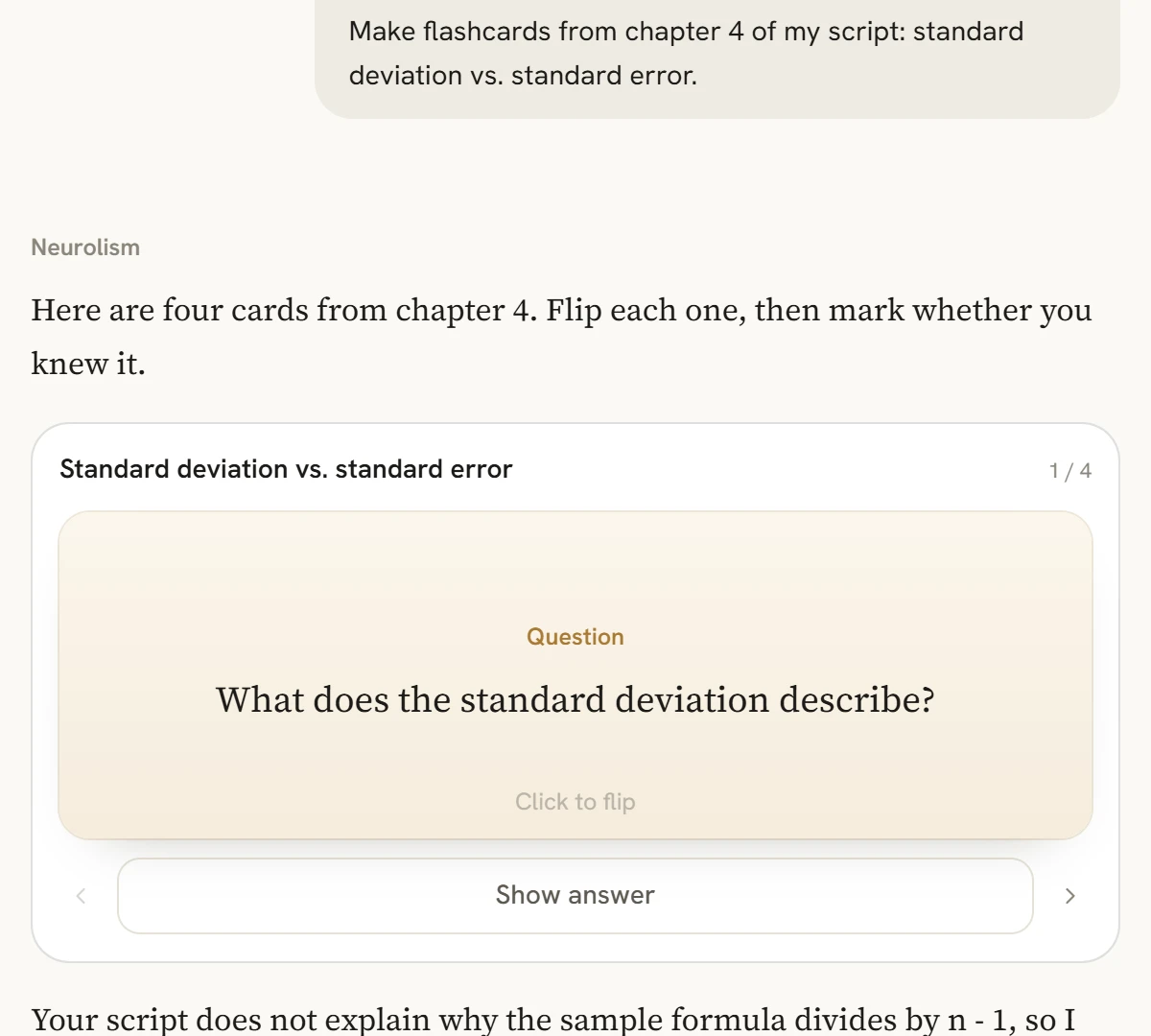
Dates come back in order, each with what happened. Maths comes back typeset, with the steps, the way it looks in your textbook.
It is not a source for an exam. What it recalls from training can be out of date or simply wrong, and it will tell you when it is unsure - but not every time it should. Check anything you are going to be graded on.
Here are my lecture notes on the Krebs cycle. Make me twelve flashcards and four questions, and mark which ones I would get wrong if I only skimmed.
Small for practice and repetition, Medium when the explanation matters more than the answer.
Compare the sizesIt will work through it with you and it will hand you an answer if you ask for one. Whether that helps you in the exam is a question you already know the answer to.
Check anything you will be graded on. It says when it is unsure - but not every time it should.
Yes, on every plan. Printed text reads well, handwriting depends on the handwriting.
Reads the numbers, and refuses to be your adviser.
Own account, own keys, prepaid credit, no seat count.
Swiss operator, named subprocessors, nothing used for training.